
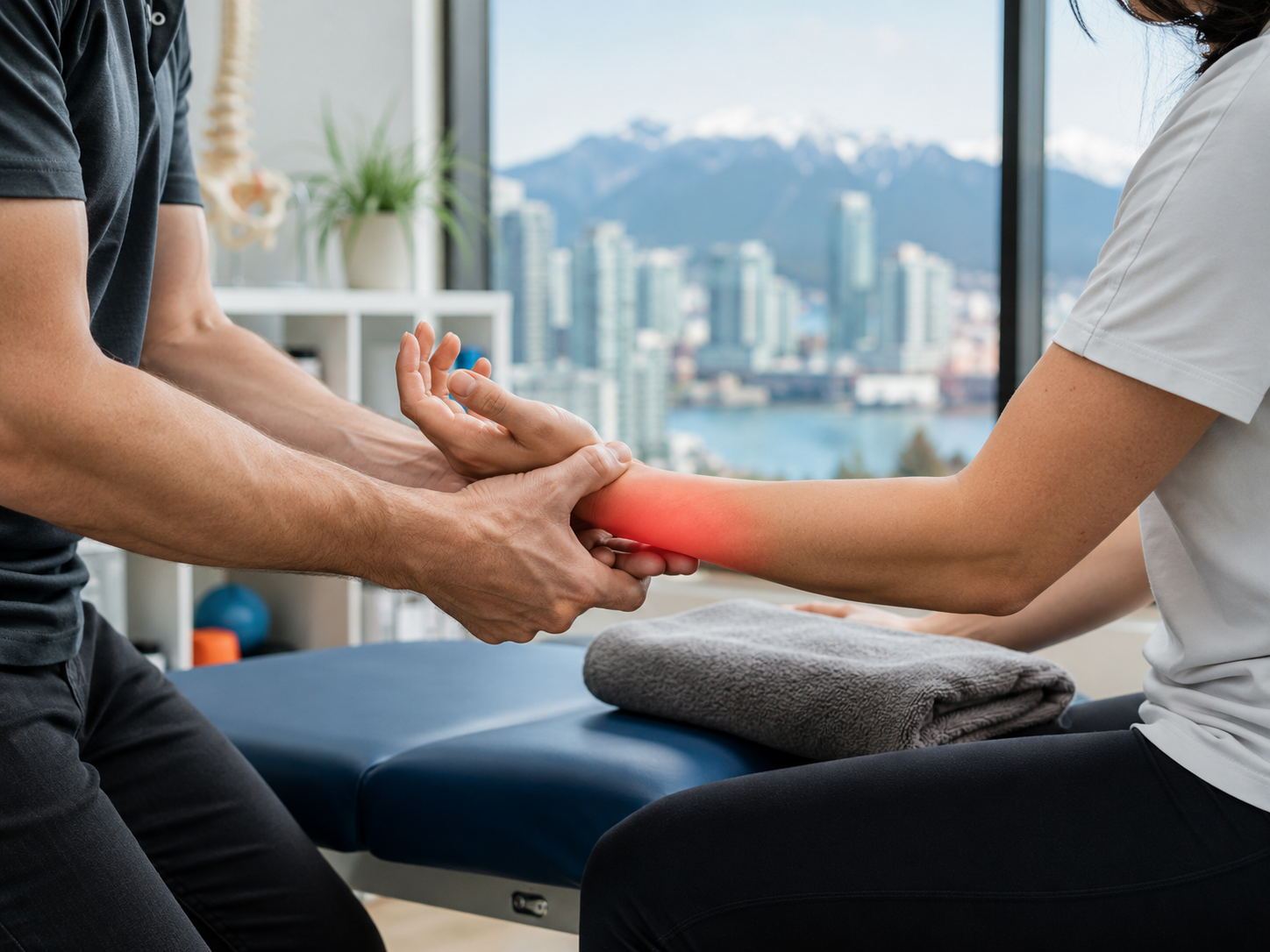
Repetitive strain injuries can make ordinary activities increasingly uncomfortable. Typing, using a mouse, lifting, gripping tools, playing an instrument, cycling, cooking, or completing repetitive tasks at work may begin to cause aching, stiffness, weakness, tingling, or reduced movement.
At Northwest Rehab Group, we provide repetitive strain injury treatment in Vancouver for people experiencing pain and reduced function related to repeated movements, prolonged positions, physical workloads, or changes in activity. Our multidisciplinary clinic in Mount Pleasant offers chiropractic care, physiotherapy, massage therapy, acupuncture, and other rehabilitation services under one roof.
Treatment is based on your symptoms, examination findings, daily activities, and personal goals. Rather than simply addressing the painful area, we consider the movements, workloads, workplace setup, recovery habits, and other factors that may be contributing to the problem.
What Is a Repetitive Strain Injury?
Repetitive strain injury, commonly shortened to RSI, is a broad term used to describe problems affecting muscles, tendons, nerves, joints, ligaments, and other soft tissues. These conditions may also be described as repetitive motion injuries, overuse injuries, cumulative trauma disorders, or work-related musculoskeletal injuries.
Repetitive strain injuries often develop gradually when a tissue is repeatedly loaded without enough time to adapt or recover. Microscopic tears in tissue can occur faster than the body can heal them. Repetition is not the only possible factor. Forceful movements, awkward positions, prolonged sitting or standing, vibration, contact pressure, and insufficient breaks are all risk factors, and identifying them is important for prevention.
Canadian workplace health guidance recognizes that musculoskeletal injuries may be associated with repetitive movements, holding a position for a long time, working in awkward postures, and completing tasks with limited opportunities for recovery.
Although repetitive strain injuries are frequently associated with office work, they can affect people in many occupations and activities, including:
- Healthcare and dental work
- Construction and skilled trades
- Warehouse and delivery work
- Hospitality and food preparation
- Hairdressing and personal care
- Music and visual arts
- Computer, design, and administrative work
- Sports, weight training, and cycling
- Repetitive household or caregiving activities
Common Repetitive Strain Injury Symptoms
Symptoms depend on the tissues and body region involved. They may initially appear only during or after a particular activity, but can become more noticeable if the aggravating workload continues.
Common symptoms include:
- Aching, burning, or sharp pain
- Tenderness in a muscle or tendon
- Stiffness or reduced range of motion
- Tingling or numbness
- Cramping or muscle fatigue
- Reduced grip strength
- Swelling around a joint or tendon
- A feeling of heaviness in the arm or hand
- Pain during typing, gripping, lifting, or reaching
- Symptoms that improve during rest but return with activity
Repetitive strain injuries can affect the neck, shoulders, elbows, forearms, wrists, hands, back, hips, knees, or lower legs. Conditions commonly associated with repeated loading include tendinopathy, tennis elbow, golfer’s elbow, rotator cuff-related shoulder pain, carpal tunnel syndrome, bursitis, and certain types of neck or back pain.
Repetitive strain injury is not one specific diagnosis. A careful assessment is important because similar symptoms may arise from different structures and may require different treatment strategies.
Assessment for Repetitive Strain Injuries
Your first appointment begins with a discussion about your symptoms and the activities that affect them. Your practitioner may ask about your occupation, workstation, exercise routine, previous injuries, sleep, recovery, and any recent increase in activity.
A physical assessment may examine:
- Joint movement
- Muscle strength and endurance
- Tender or sensitive tissues
- Grip strength
- Nerve-related symptoms
- Movement patterns
- Task-specific positions
- Activities that reproduce or relieve symptoms
Your practitioner will explain the findings, discuss suitable care options, and obtain your consent before beginning treatment. Chiropractic care in British Columbia requires an appropriate history and physical examination, informed consent, and clear communication regarding findings and recommendations.
Imaging is not routinely required for every repetitive strain injury. When symptoms suggest that further investigation or another professional opinion may be appropriate, your practitioner can discuss referral options with you.
Repetitive Strain Injury Treatment at Our Vancouver Clinic
Treatment will depend on the condition, its severity, your current capacity, and the demands you need to return to. Because repetitive strain injury treatment varies based on those factors, your plan may combine hands-on care, exercise, education, and modifications to the aggravating activity, with effective treatment sometimes also including short-term symptom management measures such as ice, rest, or over-the-counter anti-inflammatory medications where appropriate. In some cases, treatments tailored to your needs may also include bracing or splinting to protect the affected area from aggravating movements. Some people may also discuss medical management, such as pain relievers or muscle relaxants, with their physician when appropriate.
Manual Therapy
Manual therapy may be used to help reduce sensitivity, improve comfortable movement, and prepare the affected area for exercise. Depending on your assessment and preferences, this may include soft tissue techniques, joint mobilizations, stretching, or chiropractic adjustments when clinically appropriate.
Adjustments are not automatically included in every treatment plan. The techniques used should reflect your presentation, comfort level, and treatment goals.
Physiotherapy and Exercise Rehabilitation
Exercise is often an important part of repetitive strain injury rehabilitation, and physical therapy with exercise rehabilitation can help reduce stress on the affected area while rebuilding capacity. Complete rest may temporarily settle symptoms, but it does not always prepare the tissues for the demands of work, sport, or everyday activity.
A rehabilitation program may include:
- Gently stretching with wrist flexor and extensor stretches to support recovery
- Progressive strengthening to enhance function
- Tendon-loading exercises
- Grip and forearm conditioning
- Shoulder blade squeezes to improve function
- Neck or trunk strengthening
- Nerve gliding exercises to alleviate pain
- Gradual exposure to work or sport tasks
Exercises are selected and progressed according to your symptoms and current ability, and the exercises focus changes with each recovery stage. These are best guided by a practitioner for safe and effective execution. The objective is to gradually improve your tolerance for the activities that matter to you rather than relying indefinitely on passive treatment. Exercise rehabilitation strengthens affected muscles for long-term recovery from RSIs. Many people notice improvement within a few weeks of physiotherapy, although progress depends on the condition and demands involved.
Massage Therapy
Registered massage therapy may be included when muscle tension, discomfort, or restricted movement is contributing to your symptoms. Treatment may focus on the affected region as well as nearby areas that have become tense or overworked.
Massage therapy may be combined with movement advice and home exercises as part of a broader rehabilitation plan.
Acupuncture
Acupuncture may be considered as one component of care for certain musculoskeletal symptoms. Its suitability will depend on your health history, examination findings, preferences, and the type of pain you are experiencing.
Your practitioner will discuss what the treatment involves and whether it is appropriate for your situation.
Ergonomic and Activity Modification
Rehabilitation is not limited to what happens inside the clinic. Identifying the activities that repeatedly aggravate your symptoms can help you make practical changes while maintaining as much normal activity as possible. Cold/heat therapy utilizes ice packs to reduce inflammation and heat to ease stiff muscles, depending on which issue is more prominent.
Recommendations may include:
- Adjusting your chair, desk, monitor, keyboard, or mouse
- Changing how tools or equipment are positioned
- Alternating between tasks
- Taking frequent breaks
- Reducing unnecessary gripping force
- Changing lifting or reaching strategies
- Temporarily modifying exercise volume
- Gradually rebuilding working hours or duties
WorkSafeBC notes that workstation design and ergonomic adjustments can help reduce the risk of strains and other musculoskeletal injuries. The duration and frequency of exposure also matter: a movement performed repeatedly throughout a shift generally creates a different level of demand than one performed occasionally. These changes are preventive measures designed to lessen strain and support recovery over time, especially when you start noticing early symptoms and begin taking preventive measures.
The goal is not always to find one “perfect” posture. It is often more useful to create a setup that supports varied positions, comfortable movement, manageable workloads, and regular opportunities to recover.
When Should You Seek Treatment?
Consider booking an assessment for early intervention when symptoms keep returning or start becoming more frequent:
- Continue to return during the same activity
- Interfere with work, sleep, exercise, or daily life
- Are gradually becoming more frequent
- Include weakness, tingling, or numbness
- Limit your grip or movement
- Do not improve after reducing the aggravating activity
- Return whenever you resume your normal workload
For work-related cases, WorkSafeBC-supported rehabilitation may allow access to physiotherapy.
Recognizing early strain signs and seeking assessment early can help with halting symptom progression. Seek prompt medical attention for sudden or progressive weakness, significant loss of sensation, severe swelling, a cold or unusually pale limb, symptoms following major trauma, chest discomfort, or other symptoms that may require urgent assessment. HealthLink BC advises earlier assessment when arm symptoms include new or worsening numbness, tingling, coolness, or pale skin. This can help identify early strain signs, limit symptom progression, and support treatment before symptoms become harder to settle.
Preventing Repetitive Strain Injuries From Returning
Recovery is not simply about reducing pain for a few days. Your treatment plan may also address the underlying workload and build the physical capacity needed for your usual activities. Recovery time varies widely among individuals depending on the tissues involved, severity, and ongoing demands, so Repetitive Strain Injury recovery is planned around your situation.
Longer-term strategies may include:
- Continuing a manageable strengthening program
- Gradually increasing activity intensity
- Varying tasks and positions
- Using regular movement breaks to reduce stress on the irritated area
- Responding early when symptoms begin to return
- Improving sleep and recovery habits
- Reviewing equipment or workstation changes
- Using an appropriate warm-up before demanding tasks
- Implementing stress management techniques such as mindfulness or yoga, promoting relaxation
Many individuals see improvements within a few weeks, but complete recovery can take several months in more persistent cases.
We do not routinely recommend ongoing treatment on a fixed weekly or monthly schedule when it is not needed. Some cases do need ongoing management to control symptoms and prevent re-injury, with stress management techniques sometimes included as part of care, but the focus remains on self-management, exercise, and helping you remain active and strong between appointments.
Multidisciplinary RSI Treatment in Mount Pleasant
Northwest Rehab Group is a multidisciplinary healthcare clinic providing rehabilitation services to patients in Vancouver with work-related pain, sports injuries, overuse problems, and other neuromusculoskeletal concerns. Our services include physiotherapy, chiropractic care, registered massage therapy, acupuncture, and additional rehabilitation options; hand therapy is also beneficial for wrist, thumb, and forearm conditions related to RSIs when appropriate.
Having several professions in one clinic can be helpful when your care would benefit from more than one approach, including additional therapies tailored to your presentation and goals. When appropriate and with your consent, practitioners can coordinate care or recommend another qualified healthcare professional, and regular communication with your healthcare provider ensures the treatment plan remains effective as care is adjusted across disciplines.
Book Repetitive Strain Injury Treatment in Vancouver
Early assessment can help clarify what may be contributing to your symptoms while supporting achieving optimal recovery and achieving optimal outcomes. Early care can also help relieve pain, guide prescribed exercises, and reduce the chance of symptoms becoming more persistent.
Book an appointment today to receive individualized care, a dedicated physiotherapy regimen, and a treatment plan for your repetitive strain injury.



0 Comments