
A bulging disc is an imaging finding that may or may not be related to pain. Some people have no discomfort at all, while others experience pain, stiffness, leg pain, altered sensation or reduced tolerance for sitting, lifting and exercise. At Northwest Rehab Group in Vancouver, we assess the person rather than treating an imaging result in isolation. Our approach is conservative and individualized. Care may include physiotherapy, exercise, education, manual therapy and other appropriate options based on your presentation. The goal is not to “put a disc back in place” or improve alignment. Instead, treatment focuses on reducing pain, improving function and helping you return to normal activity.
What Is a Bulging Disc?
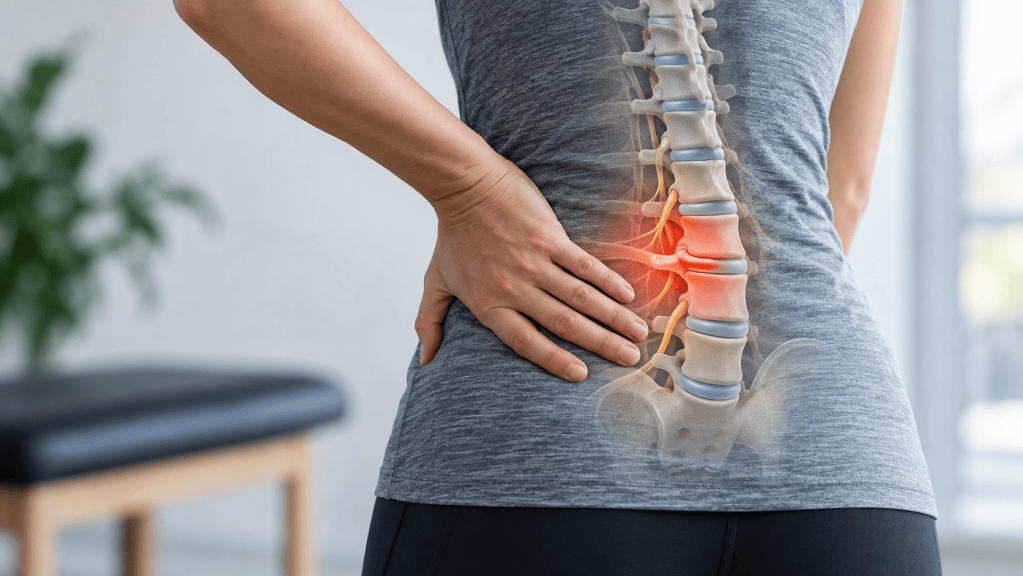
Discs sit between the vertebrae and help the spine absorb and distribute load. A bulging disc occurs when the outer edge of a spinal disc pushes beyond its usual boundary over a relatively broad area. This can happen with age-related change, repeated loading or injury, and it can affect the lumbar spine or cervical spine. Importantly, this finding does not automatically mean that tissue is damaged enough to cause symptoms. Imaging changes are common in people without pain, so the scan needs to be considered alongside medical history, physical examination and neurological findings.
Bulging Disc vs Herniated Disc
A bulging disc and a herniated disc are related findings, but they are not interchangeable terms. A bulge generally involves a broader extension of the outer contour. A herniated disc is more focal and involves material extending through or beyond a weakened part of the outer layer. The herniation may be described as a protrusion, extrusion or sequestration, depending on its appearance.
This distinction is important when discussing herniation. A person can have a bulging disc without having a herniated disc, and either finding can exist without causing pain. When a herniated disc irritates a nerve, it may contribute to radicular pain, weakness or numbness. People searching for Vancouver herniated disc treatment may see the terms used loosely online, but they should not be treated as the same diagnosis.
What Can This Feel Like?
When the finding is clinically relevant, symptoms depend on its location and whether nearby tissues or a nerve are irritated. A lumbar problem may be associated with low back pain, buttock discomfort or pain travelling into the leg. A problem higher in the spine may be associated with neck or arm complaints.
Pain alone cannot confirm that the imaging finding is responsible. Hip pain, joint irritation, muscular problems and other causes can create overlapping presentations. That is why a clinician looks at the overall pattern instead of assuming every imaging finding requires treatment.
How We Assess the Problem
At your first appointment in Vancouver, the clinician will ask about the onset of the problem, aggravating and relieving factors, activity limitations and any neurological changes. The assessment may include movement of the spine, strength, reflexes, sensation and functional tasks, with additional testing selected according to the presentation and pain response.
Imaging is not routinely required for uncomplicated back pain or suspected disc-related symptoms. If you already have an MRI or other imaging report, your clinician can review the findings alongside your history and physical examination. MRI is particularly useful when detailed information about the discs, nerves and other soft tissues is needed, while X-rays are more useful for assessing bones and certain other spinal changes. Further investigation or medical referral may be recommended when symptoms do not follow the expected pattern, persist despite appropriate care, or when significant nerve involvement or another condition is suspected.
Physiotherapy and Active Rehabilitation
Physiotherapy generally places the emphasis on active rehabilitation. Depending on your needs, care may include mobility work, trunk and hip strengthening, movement-control exercises, graded loading and a progressive return to work, sport or everyday activity as pain allows.
For a lower-back presentation, physiotherapy may also include advice about sitting, lifting, pacing and staying active. The purpose is not to force tissue into a particular position or chase pain from visit to visit. Instead, rehabilitation aims to improve capacity around the spine and give you practical strategies for recovery.
Manual Therapy and Chiropractic Care
Manual therapy may be included as part of a broader rehabilitation plan when appropriate. Depending on your assessment, symptoms and preferences, this may include joint mobilization, soft-tissue techniques, stretching and, in some cases, spinal manipulation or an adjustment.
At Northwest Rehab Group, manual therapy is not used with the aim of “putting a disc back in place” or correcting spinal alignment. Instead, it may be combined with exercise and self-management to help improve movement, manage pain and support a gradual return to normal activity.
Massage Therapy
Massage therapy may be helpful when muscle tension, guarding or soreness accompanies a disc-related episode. Treatment can focus on the muscles around the lower back, hips or other areas that have become uncomfortable as you change the way you move.
Massage does not change the position of a bulging disc. Instead, it may be used for short-term symptom relief alongside exercise, movement and other rehabilitation strategies.
Acupuncture
Acupuncture may be considered as part of a broader treatment plan for some people experiencing pain associated with a disc bulge. Depending on your symptoms and preferences, acupuncture may be used alongside physiotherapy, exercise, manual therapy or other approaches aimed at improving comfort and function.
At Northwest Rehab Group, acupuncture is considered on an individual basis rather than used as a stand-alone treatment for a disc bulge. Your practitioner can discuss whether it is appropriate for your presentation and how it may fit alongside active rehabilitation and self-management.
What About Spinal Decompression?
The term spinal decompression can mean different things. In some clinics, “non-surgical spinal decompression” refers to mechanical traction. This involves applying a pulling force to the spine. Current clinical guidelines do not recommend routine traction for low back pain with or without sciatica.
Spinal decompression can also refer to a surgical procedure used in selected cases where pressure on a nerve is causing significant or persistent symptoms. This is very different from mechanical traction and is considered by a medical specialist when clinically appropriate.
For most people with a disc bulge, treatment decisions should be based on symptoms, examination findings and function rather than the imaging findings alone.
When Are Injections or Surgery Considered?
A disc bulge by itself does not mean that injections or surgery are required. Most people with uncomplicated back pain or disc-related symptoms begin with conservative care such as activity modification, exercise and physiotherapy.
For people with acute and severe sciatica, a physician may sometimes consider an epidural injection of local anaesthetic and steroid. This is a medical procedure aimed at managing symptoms associated with nerve irritation rather than correcting the disc itself.
Surgery may be considered when significant nerve-related symptoms persist despite appropriate non-surgical treatment, particularly when clinical symptoms and imaging findings correspond. Progressive neurological changes may also require more urgent medical or specialist assessment.
What About Other Treatment Modalities?
The most appropriate treatment depends on what is contributing to your symptoms rather than simply on the presence of a disc bulge on imaging. Some therapies used for other musculoskeletal conditions are not routinely used for disc-related problems.
For example, shockwave therapy is commonly associated with certain tendon and soft-tissue conditions rather than treatment of a bulging disc itself. Your clinician can explain which options are relevant to your presentation and avoid adding treatments that are unlikely to contribute meaningfully to your recovery.
When to Seek Urgent Medical Care
Seek urgent medical assessment for new bowel or bladder changes, numbness around the saddle or groin area, rapidly worsening weakness, severe problems after significant trauma or other signs of serious spinal or nerve involvement. These situations should not wait for a routine rehabilitation appointment.
A clinician should also reassess the diagnosis when symptoms change substantially or new neurological findings develop. Appropriate care includes recognizing when conservative management is no longer the right pathway.
Care at Northwest Rehab Group
Northwest Rehab Group is a multidisciplinary clinic in Vancouver offering chiropractic manual therapy, physiotherapy, registered massage care and acupuncture. Treatment plans are based on the individual presentation and may combine hands-on care with exercise, education and self-management.
If you have been told that you have a bulging disc, or you have pain that may be related to a lumbar or cervical problem, contact Northwest Rehab Group in Vancouver. Book an appointment for an assessment, or contact the clinic if you would like to discuss which service may be most appropriate. Our focus is helping you understand the problem, identify sensible next steps and support your recovery without making unsupported promises about the imaging finding itself.


0 Comments