


Cubital tunnel syndrome can cause tingling, numbness, aching or weakness that travels from the inside of the elbow into the forearm, ring finger and little finger. Symptoms often become more noticeable when the elbow stays bent for a long time, such as while sleeping, driving, working at a computer or holding a phone. If these symptoms are affecting work, exercise, sleep or hand function, an assessment can help determine whether the ulnar nerve is being irritated at the elbow or whether another problem is contributing. At Northwest Rehab Group, cubital tunnel syndrome treatment in Vancouver is based on your symptoms, physical findings, daily activities and goals rather than a one-size-fits-all plan.
What Is Cubital Tunnel Syndrome?
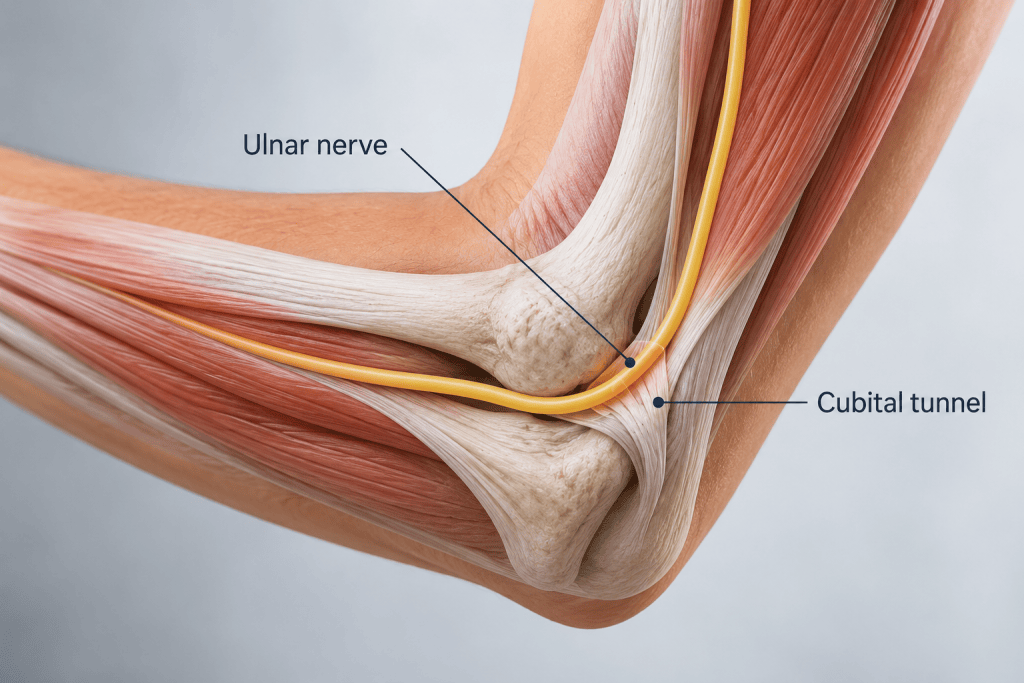
The ulnar nerve travels from the neck down the arm and passes behind the bony prominence on the inside of the elbow through a narrow space called the cubital tunnel. Like other nerve tunnels in the body, this area provides limited room for the nerve and surrounding tissues. Repeated pressure, prolonged elbow bending or irritation around the joint can increase sensitivity in the nerve. Typical symptoms include pins and needles or reduced sensation in the little finger and half of the ring finger, aching around the inner elbow, reduced grip strength, hand clumsiness and, in more advanced cases, weakness or visible loss of muscle bulk in the hand. Symptoms can overlap with other problems, so the location of tingling alone is not enough to confirm the diagnosis.

Cubital tunnel syndrome may develop without one obvious cause. Common contributing factors include regularly leaning on the elbow, sleeping with the elbow tightly bent, repetitive bending and straightening, a previous elbow injury, swelling, arthritis or bony changes around the joint. Some people also have an ulnar nerve that moves or “snaps” over the inside of the elbow during movement. Because nerves travel through several anatomical tunnels and across multiple joints, a careful examination should also consider whether symptoms could be coming from the wrist, neck or another part of the nerve pathway rather than assuming every case is caused by the elbow.

How We Assess and Treat Cubital Tunnel Syndrome
Assessment begins with a detailed history of when the symptoms started, which fingers are affected, what positions make them better or worse, and whether you have noticed changes in grip, dexterity or strength. A physical examination may assess the elbow, wrist, neck and surrounding muscles and joints, as well as sensation, strength and movements that place tension on the ulnar nerve. Looking beyond a single painful spot matters because nerve tunnels can produce similar symptoms at different locations. When symptoms are persistent, progressive or unclear, a medical provider may recommend nerve conduction testing, electromyography or imaging to help confirm the location and severity of nerve involvement.
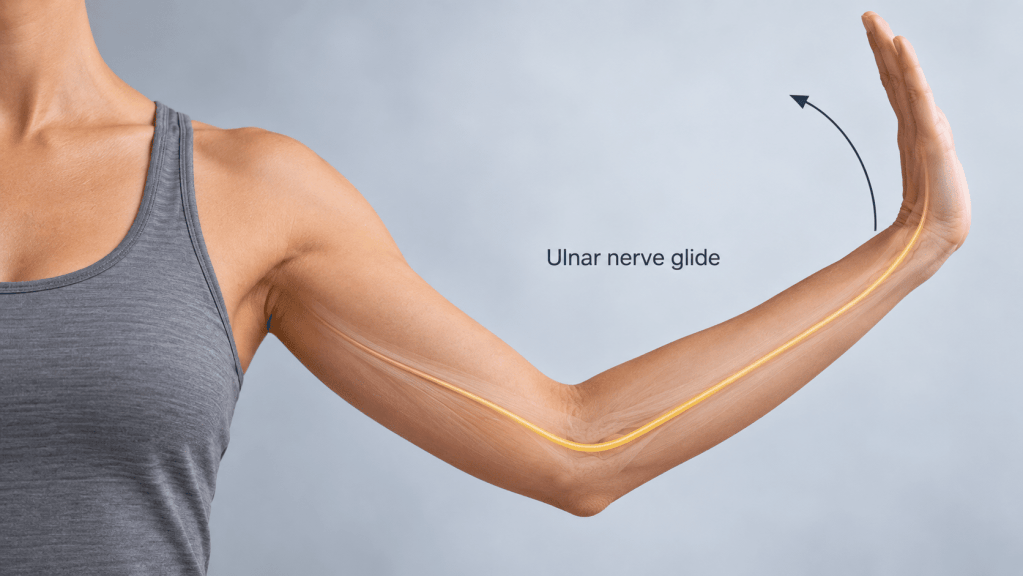
Conservative care usually focuses first on reducing irritation and improving how the arm tolerates daily activity. Depending on the assessment, care at NRG may include manual therapy to the elbow, forearm, wrist, shoulder or related areas; this may involve soft-tissue techniques, mobilizations, stretching and, where clinically appropriate, joint manipulation or adjustments. Rehabilitation may also include ulnar nerve-gliding exercises, progressive strengthening, mobility work and changes to work, sport or training habits. The goal is not to force a nerve through tight tunnels, but to reduce aggravating load, maintain comfortable movement and build capacity around the affected region. Treatment is individualized, and exercises should not create a significant increase in numbness, tingling or pain.
Simple changes outside the clinic can also be important. Avoiding prolonged pressure on the inside of the elbow, varying desk and arm positions, taking breaks from repetitive tasks and avoiding sustained deep elbow flexion may reduce irritation. Some people benefit from an elbow pad during the day or a night splint that prevents the elbow from staying tightly bent while sleeping. Your clinician can also help you adapt exercise or gym movements rather than stopping activity unnecessarily. As symptoms settle, strengthening the shoulder, forearm, wrist and hand may help restore confidence and function. These strategies are especially useful when the nerve is being irritated by repeated positions around one or more narrow tunnels rather than by a problem that requires surgical decompression. Similar principles are used when assessing irritation at other nerve tunnels in the upper limb.

When to Seek Further Medical Evaluation
Not every case should be managed with conservative rehabilitation alone. Persistent numbness, increasing hand weakness, loss of fine motor control or visible muscle wasting can indicate more significant nerve compression and should be medically evaluated. Specialist assessment may also be appropriate when symptoms do not improve despite reasonable activity modification and rehabilitation. In more severe cases, surgery can be used to enlarge the cubital tunnel or move the ulnar nerve to reduce pressure. The same principle applies to other nerve tunnels: the right treatment depends on where the nerve is affected, how severe the impairment is and whether there are signs of ongoing nerve damage.
If tingling, numbness or inner-elbow pain is limiting your sleep, work, sport or hand function, Northwest Rehab Group can assess the problem and help you understand the next steps. Our multidisciplinary clinic in Mount Pleasant works with musculoskeletal and nerve-related conditions using individualized care, exercise-based rehabilitation and manual therapy when appropriate. We also focus on self-management so that progress does not depend on indefinite treatment. If your examination suggests that further testing or specialist care is needed, referral can be discussed. Book an appointment at our Vancouver clinic to start with an assessment and a plan that fits your symptoms, activity level and goals. Understanding which movements and tunnels are contributing to irritation is often the first step toward making day-to-day use of the arm more comfortable.



0 Comments