

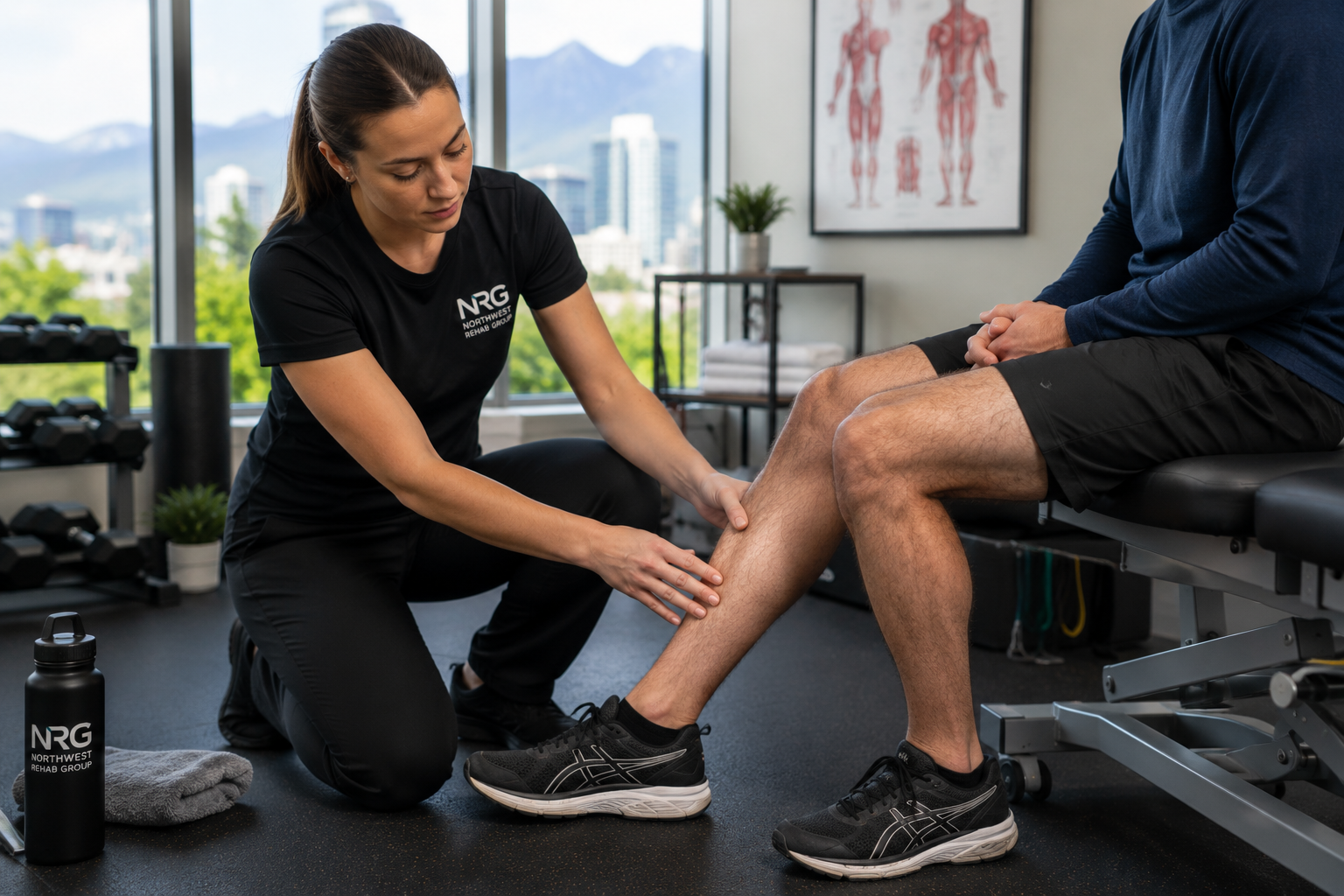
Compartment syndrome can be a confusing and worrying condition, especially for runners, cyclists, field-sport athletes, and active people in Vancouver who develop repeated lower leg pain during exercise. At Northwest Rehab Group in Mount Pleasant, Vancouver, British Columbia, assessment and rehabilitation focus on identifying the type of compartment syndrome involved, recognizing urgent warning signs, and building a safe treatment plan that may include physiotherapy, manual therapy, exercise rehabilitation, gait retraining, activity modification, orthotics, and referral when medical or surgical care is needed. Our clinic has a dedicated team of specialists providing personalized care to support your recovery.
Compartment syndrome is not a condition to ignore. Acute compartment syndrome is a medical emergency. Chronic exertional compartment syndrome, on the other hand, is often activity-related and may be managed with careful assessment, rehabilitation, and referral pathways where needed. The right treatment depends on the cause, severity, timing of symptoms, and whether pressure inside the muscle compartment is threatening the nerves and blood supply.
Overview of Compartment Syndrome
Compartment syndrome is a condition characterized by increased pressure within a closed muscle compartment. Muscles, nerves, and blood vessels sit inside layers of connective tissue called fascia. Because fascia does not stretch easily, swelling or increased muscle volume can raise pressure inside the compartment and reduce blood flow to the tissues.
Although compartment syndrome can occur in individuals of all ages, it is more prevalent among athletes and those engaged in physically demanding jobs due to repetitive activities or trauma. While it can develop in different areas of the body, it often affects the lower leg. The lower leg has four main compartments: anterior, lateral, superficial posterior, and deep posterior. These compartments contain different muscles, nerves, and blood vessels, which is why symptoms can vary depending on which compartment is affected. (NCBI)
There are two broad patterns patients should understand:
Acute compartment syndrome usually occurs after trauma, such as a fracture, crush injury, bleeding, or severe swelling. It is urgent because untreated pressure can damage muscle and nerve tissue. (NCBI)
Chronic exertional compartment syndrome usually appears during exercise and eases with rest. It is more common in runners and athletes involved in repetitive impact activity, and the lower leg is commonly involved. (Mayo Clinic)
Causes and Risk Factors
Compartment syndrome may develop after injury, repetitive exercise, repetitive activity, or anatomical and systemic factors that increase pressure inside a muscle compartment.
It is important that underlying causes, such as trauma or repetitive activity, are adequately addressed to prevent recurrence of compartment syndrome.
Traumatic causes
Acute compartment syndrome is most often linked to trauma. Possible causes include:
- Fractures, especially tibial fractures
- Crush injuries
- Severe bruising or bleeding into a compartment
- Tight casts, bandages, or compression wraps
- Burns
- Vascular injury
- Significant swelling after surgery or trauma
Acute cases need immediate medical assessment because tissue damage can occur if pressure is not relieved quickly.
Overuse and sports risk factors
Chronic exertional compartment syndrome is usually linked to repeated loading. In Vancouver, this may affect people who run on roads or trails, train for distance events, play field sports, hike, ski, or cycle with high training volume.
Risk factors may include:
- Rapid increases in running distance or intensity
- Repetitive hill training
- Running on hard surfaces
- Poor recovery between sessions
- High-volume endurance training
- Lower leg muscle overdevelopment or tightness
- Footwear changes
- Running technique issues
- Returning to sport too quickly after injury
Maintaining good physical condition and using proper techniques during physical activities are important preventive strategies. These measures help reduce the risk of developing compartment syndrome, especially for those involved in repetitive or high-intensity exercise.
Chronic exertional compartment syndrome is often exercise-induced and can cause pain, swelling, and disability in the affected muscles. (Mayo Clinic)
Systemic and anatomical risk factors
Some people may be more vulnerable because of their anatomy, tissue characteristics, or medical history. Contributing factors may include:
- Naturally tight fascial compartments
- Muscle hypertrophy
- Previous lower leg injury
- Scar tissue after surgery or trauma
- Biomechanical overload
- Reduced ankle mobility
- Foot posture or gait issues
- Certain medical conditions affecting swelling or circulation
A physiotherapy assessment helps identify which factors may be contributing and whether further testing or referral is needed.
Recognizing Symptoms and When to Seek Care
Symptoms vary depending on whether the condition is acute or chronic. Early symptoms such as pain out of proportion to the injury, tingling, or numbness should not be ignored. Prompt recognition and early detection of these early symptoms are crucial for enabling timely intervention and preventing serious complications associated with compartment syndrome.
Acute compartment syndrome symptoms
Acute compartment syndrome can cause:
- Severe pain that feels out of proportion to the injury
- Pain that worsens despite rest or medication
- Pain with passive stretching of the involved muscles
- Marked tightness or firmness in the limb
- Numbness, tingling, or burning
- Weakness or difficulty moving the foot or toes
- Skin that feels tense or swollen
- Reduced sensation
A suspected acute compartment syndrome should be treated as an emergency. Patients should go to the emergency department or call emergency services. Physiotherapy is not the first step for suspected acute compartment syndrome.
Chronic exertional compartment syndrome symptoms
Chronic exertional compartment syndrome usually has a more predictable pattern. Symptoms often begin after a consistent amount of exercise and improve after stopping.
Common symptoms include:
- Tightness, pressure, or cramping in the lower leg
- Burning or aching pain during activity
- Numbness or tingling in the foot
- Weakness during exercise
- Foot slap or difficulty lifting the foot
- Symptoms that ease after rest
- Symptoms that recur when activity resumes
Because other problems can mimic compartment syndrome, such as shin splints, stress fractures, nerve irritation, tendon pain, or vascular issues, assessment should rule out other likely causes. Clinicians often check for more common exercise-related problems before moving to specialized compartment testing. (Mayo Clinic)
Lower Leg Focus: Assessing Compartment Syndrome in the Lower Leg
Lower leg compartment syndrome needs a careful clinical assessment because symptoms may reflect the compartment involved. Accurate diagnosis and prompt treatment of the affected area are crucial to prevent tissue damage and improve patient outcomes.
Mapping the lower leg compartments clinically
The four lower leg compartments are:
Anterior compartment: often linked with pain at the front of the shin, possible foot slap, and symptoms related to ankle dorsiflexion.
Lateral compartment: may create pain or tightness along the outer lower leg, sometimes with symptoms into the top or outside of the foot.
Superficial posterior compartment: may feel like calf tightness or cramping.
Deep posterior compartment: may produce deeper calf pain, arch symptoms, or symptoms around the inside of the ankle.
A physiotherapist may assess the location of pain, tissue tension, sensation, strength, ankle mobility, calf capacity, foot mechanics, and gait.
Documenting exercise-provoked lower leg pain
For suspected chronic exertional compartment syndrome, the timing of symptoms is important. A useful assessment may record:
- Time or distance before symptoms start
- Pain level at rest
- Pain level during activity
- Pain level immediately after stopping
- Time needed for symptoms to settle
- Any numbness, weakness, or foot control changes
- Whether symptoms appear on one side or both sides
- Training load, footwear, terrain, and recent changes
In many cases, symptoms are not obvious at rest. Examination after exercise may reveal tenderness, tightness, muscle bulging, or functional changes.
Imaging and compartment-specific testing
Imaging may be recommended when symptoms need further investigation or when another diagnosis must be ruled out. MRI may help assess muscle structure and rule out stress fracture or other causes of leg pain. Advanced MRI protocols may also assess compartment fluid volume before, during, and after exercise.
Differentiating Acute, Chronic, and Chronic Exertional Compartment Syndrome
The treatment pathway depends on the type of compartment syndrome.
Acute compartment syndrome
Acute compartment syndrome involves dangerous pressure build-up, often after trauma. Diagnosis is based on clinical suspicion, examination, and, in some cases, compartment pressure measurement. It requires urgent surgical assessment. Delayed care can lead to muscle and nerve damage.
Chronic compartment syndrome
Chronic compartment syndrome may refer to recurring pressure-related symptoms that are not immediately limb-threatening but continue to affect activity. Patients may report repeated tightness, pain, or weakness linked to exercise or prolonged loading.
Chronic exertional compartment syndrome
Chronic exertional compartment syndrome is a specific activity-related pattern. Symptoms are usually provoked by exercise and relieved by rest. It often affects the same compartment on both sides of the body and commonly involves the lower leg. (Mayo Clinic)
Diagnosis and Assessment Pathways
A good assessment pathway should combine clinical history, physical examination, functional testing, and referral where needed.
Intracompartmental pressure testing
Compartment pressure testing is often considered the gold standard for diagnosing chronic exertional compartment syndrome. It involves measuring pressure inside the muscle compartment before and after exercise. Because it is invasive, it is usually reserved for cases where the history and other tests strongly suggest the condition.
Near-infrared spectroscopy
Near-infrared spectroscopy, or NIRS, is a non-invasive test that measures oxygen levels in the affected tissue. It may be performed at rest and after physical activity to help assess whether the compartment has reduced blood flow during exertion.
Recording pre-, during-, and post-exertion findings
Physiotherapy assessment may include repeated testing before, during, and after activity. This can help document:
- Pain onset
- Changes in gait
- Calf or shin tightness
- Neurological symptoms
- Strength changes
- Ankle control
- Recovery time after stopping activity
This information can support treatment planning and, when needed, referral to a physician or orthopaedic specialist.
Physiotherapy Treatment Approach
Physiotherapy for compartment syndrome at Northwest Rehab Group is delivered through a comprehensive physiotherapy approach designed to manage symptoms, provide pain relief, and promote recovery. This includes reducing aggravating load, improving movement efficiency, restoring strength and mobility, and supporting a safe return to activity.
At Northwest Rehab Group, physiotherapy is part of a multidisciplinary clinic model in Mount Pleasant, Vancouver, with services that include physiotherapy, chiropractic therapy, massage therapy, naturopathic medicine, acupuncture, custom orthotics, neurological rehabilitation, concussion therapy, and related rehabilitation services.
Physiotherapy treatment goals
The main goals are to:
- Reduce symptom provocation
- Improve lower limb strength and endurance
- Improve ankle, foot, hip, and trunk mechanics
- Identify training errors
- Build tissue capacity gradually
- Support return to running, sport, or work
- Identify cases needing medical or surgical referral
Consistent treatment over time is essential for full recovery from compartment syndrome.
Biomechanical and gait assessment
A physiotherapist may assess:
- Walking and running gait
- Foot strike pattern
- Cadence
- Step width
- Hip and knee control
- Ankle dorsiflexion
- Calf endurance
- Foot posture
- Correct posture
- Training footwear
- Load tolerance
For runners, small changes in cadence, stride length, hill exposure, or training distribution may reduce lower leg loading.
Manual therapy techniques
Manual therapy may be used as part of a broader rehabilitation plan. It may include soft tissue work, joint mobilizations, stretching, and other modalities where appropriate. The aim is not to “fix alignment” but to improve mobility, reduce sensitivity, and support better movement options.
Manual therapy may focus on:
- Calf and shin soft tissue mobility
- Ankle joint mobility
- Foot mobility
- Hip mobility
- Neural mobility where nerve sensitivity is present
- Recovery support after high-load activity
Manual therapy alone is unlikely to resolve true chronic exertional compartment syndrome, but it can support rehabilitation when combined with exercise, education, and load management.
Monitoring pain and function outcomes
Progress should be measured, not guessed. Regular follow-up appointments with healthcare professionals are important to monitor progress and adjust compartment syndrome treatment in Vancouver as needed. Useful markers include:
- Pain during a known activity
- Time to symptom onset
- Walking or running distance
- Calf raise capacity
- Strength testing
- Return-to-run tolerance
- Patient-reported function
- Recovery time after activity
Customized Rehabilitation Programs
Each patient needs a program based on their symptoms, goals, training history, and assessment findings. Essential components of a successful rehabilitation plan for compartment syndrome treatment in Vancouver include prescribed exercises and lifestyle modifications, which work alongside physiotherapy to support recovery and prevent long-term damage.
Progressive strengthening schedules
A strengthening plan may include regular exercises and strengthening exercises, which are key to maintaining mobility and supporting recovery. These may involve:
- Isometric calf and ankle exercises early on
- Seated and standing calf raises
- Tibialis anterior strengthening
- Peroneal strengthening
- Foot intrinsic strengthening
- Hip abductor and glute strengthening
- Hamstring and quadriceps strengthening
- Step-downs, split squats, and single-leg control work
- Plyometric progression when appropriate
Progression should be based on symptom response, not just time.
Flexibility and neural mobility drills
Some patients may benefit from:
- Gentle stretching and regular stretching exercises, as recommended by physiotherapists, to maintain mobility and support recovery
- Calf flexibility work
- Soleus mobility drills
- Ankle dorsiflexion mobility
- Gentle nerve glides if neural symptoms are present
- Hip mobility exercises
- Recovery-focused movement between training sessions
These should be prescribed carefully. Aggressive stretching into severe pain is not appropriate.
Regular outcome reassessments
Reassessment helps determine whether the program is working. A physiotherapist may adjust exercise intensity, running volume, footwear advice, orthotics, or referral recommendations based on response.
Personalized Rehabilitation Programs and Return-To-Activity Plans
For athletes, treatment should connect directly to performance demands. A runner, cyclist, soccer player, hiker, and gym athlete may all need different plans. Ongoing treatment and preventive strategies are important not only for returning to activity but also for supporting long term health and mobility, helping to prevent recurrence and maintain overall well-being.
Return-to-run planning
A graded return-to-run plan may include:
- Walking tolerance first
- Walk-run intervals
- Flat terrain before hills
- Lower intensity before speed work
- Shorter strides and cadence adjustments
- Rest days between early run sessions
- Gradual weekly increases
- Monitoring symptoms during and after runs
The goal is to build capacity without repeatedly provoking the same compartment symptoms.
Functional milestones
Measurable milestones may include:
- Pain-free walking for a set time
- Single-leg calf raise target
- Hop tolerance
- Run-walk tolerance
- Symptom-free sport drills
- Strength symmetry
- Normal recovery after training
- Confidence returning to activity
Practical Steps for Treating Compartment Syndrome: Non-Surgical Options
Non-surgical treatment may be appropriate for chronic or exertional cases, especially early in care or while diagnostic work-up is ongoing.
Activity modification and load management
This may involve:
- Reducing running volume temporarily
- Avoiding hills or speed work
- Switching to cycling, swimming, or strength training where tolerated
- Adding recovery days
- Ensuring adequate rest between activities
- Taking adequate rest as a key preventive measure
- Emphasizing proper rest to support recovery and reduce recurrence risk
- Avoiding sudden changes in shoes or terrain
- Tracking symptoms after each session
For true chronic exertional compartment syndrome, non-surgical care may not always provide lasting relief unless the aggravating activity is reduced or modified significantly.
Orthotics and biomechanical correction
Orthotics may help when foot mechanics, load distribution, or footwear issues contribute to symptoms. They are not a universal solution, but they may be useful for selected patients.
A physiotherapist may consider orthotics alongside:
- Footwear advice
- Strengthening
- Running gait changes
- Ankle and foot mobility work
- Gradual exposure to activity
Targeted exercise therapy
Exercise therapy may include:
- Lower leg strengthening
- Foot and ankle control
- Hip and trunk strengthening
- Balance and proprioception
- Progressive impact loading
- Sport-specific drills
- Conditioning alternatives during symptom reduction
Surgical and Acute Management
Fasciotomy referral
Fasciotomy is a surgical procedure used to release pressure in a compartment. It may be required urgently for acute compartment syndrome or considered for chronic exertional compartment syndrome when conservative treatment is not enough and diagnostic findings support the diagnosis.
Acute exertional compartment syndrome and acute compartment syndrome can require emergency fasciotomy to reduce the risk of irreversible muscle and nerve injury. (NCBI)
Expedited referral for acute cases
If acute compartment syndrome is suspected, the next step is not routine physiotherapy. The patient should be referred urgently to emergency medical care.
Post-fasciotomy physiotherapy pathway
After fasciotomy, physiotherapy may support:
- Wound-safe mobility
- Swelling management
- Scar mobility when cleared
- Range of motion
- Gradual strengthening
- Gait retraining
- Return-to-run planning
- Sport-specific rehabilitation
- Monitoring for recurrence or complications
In severe or acute cases, patients may experience a longer recovery period after surgery, requiring ongoing treatment and follow-up.
The post-surgical plan should follow the surgeon’s instructions and be adapted to the patient’s healing timeline.
Preventive Strategies and Patient Education
Prevention focuses on managing training load, improving movement capacity, recognizing symptoms early, and incorporating regular exercises and lifestyle modifications as important preventive strategies.
Load and training management
Patients may be advised to:
- Increase training gradually
- Avoid sudden jumps in mileage or intensity
- Rotate high-impact and low-impact sessions
- Schedule recovery weeks
- Track pain and tightness patterns
- Avoid repeatedly training through escalating symptoms
Footwear and technique adjustments
Footwear and technique changes may help reduce lower leg strain. Depending on the patient, this may include:
- Reviewing shoe age and suitability
- Avoiding abrupt footwear transitions
- Adjusting running cadence
- Reducing overstriding
- Modifying hill exposure
- Addressing cycling cleat or bike fit issues where relevant
Early symptom recognition
Patients should seek assessment when they notice repeated exercise-related lower leg tightness, burning, numbness, weakness, or pain that follows a predictable pattern.
Managing Recurrence: Compartment Syndrome Recur and Follow-Up
Compartment syndrome symptoms can recur, especially if training load rises too quickly or underlying contributors are not addressed.
Follow-up may include:
- Periodic reassessment
- Exercise progression updates
- Running or sports technique review
- Footwear review
- Strength and mobility testing
- Monitoring for nerve symptoms
- Referral if symptoms worsen or fail to improve
Long-term maintenance exercise should not mean indefinite passive care. It should focus on self-care, strength, mobility, and clear strategies that help the patient stay active.
Local Resources and Why Choose Vancouver Physiotherapy Clinics for Compartment Syndrome Treatment
Vancouver patients benefit from access to physiotherapy clinics, sports medicine providers, imaging services, orthopedic specialists, and multidisciplinary rehabilitation teams.
A clinic like Northwest Rehab Group can support patients through assessment, rehabilitation, manual therapy, custom orthotics, and coordination with other healthcare providers when further testing or referral is needed. NRG is located at 2830 Main St, Vancouver, BC V5T 3G2, and patients can book through the clinic’s JaneApp booking page.
For compartment syndrome, the most important clinic qualities include:
- Experience assessing lower leg pain
- Ability to differentiate urgent and non-urgent presentations
- Exercise-based rehabilitation planning
- Gait and biomechanical assessment
- Clear referral pathways
- Collaboration with physicians and orthopedic surgeons
- Access to diagnostic options such as compartment pressure testing, MRI, or NIRS where indicated
Home Care Tips and Recovery Timeline
Home care depends on the type and severity of symptoms, with a primary focus on the affected limb and affected area. Rest, elevation, and ice application are commonly recommended to help reduce swelling and decrease swelling in the affected limb. Activity modification is important, and incorporating gentle stretching as advised by a physiotherapist can help maintain mobility and reduce stiffness. These strategies, along with gradual return to activity, support recovery and can provide pain relief as you progress through recovery milestones.
Short-term rest and activity modification
For chronic exertional symptoms, patients may need to reduce or stop the activity that triggers symptoms while they begin assessment and rehabilitation. Low-impact cross-training may be used if it does not provoke symptoms.
Icing for swelling control
Ice may help with short-term swelling or discomfort after minor soft tissue irritation. However, icing should not be used to delay urgent care if symptoms suggest acute compartment syndrome.
Expected recovery milestones
Recovery timelines vary. With physiotherapy, improvements can often be seen within a few weeks. Some patients with mild exertional symptoms may improve with load management and rehabilitation over several weeks to months. Others with confirmed chronic exertional compartment syndrome may need further medical assessment or surgical consultation if symptoms continue to limit activity.
A practical recovery plan may include:
Weeks 1–2: reduce aggravating load, assess symptoms, begin mobility and low-load strengthening.
Weeks 3–6: progress strengthening, address gait or biomechanics, begin graded return to activity if symptoms allow.
Weeks 6–12+: build sport-specific capacity, increase running or training volume gradually, monitor recurrence.
Post-surgical recovery follows a different pathway and should be guided by the surgeon and physiotherapist.
Referral, Documentation, and Next Steps
Good documentation helps patients receive appropriate care. For suspected compartment syndrome, referral notes may include:
- Symptom location
- Onset pattern
- Exercise trigger
- Time to symptom onset
- Time to symptom resolution
- Neurological symptoms
- Strength or gait changes
- Relevant injury history
- Training history
- Outcome measures
- Response to activity modification
- Reason for referral
Clinicians should also document baseline and follow-up measures so progress is clear.
If you have recurring lower leg pain, tightness, numbness, or weakness during exercise, book an initial physiotherapy assessment. If symptoms are severe, rapidly worsening, linked to trauma, or include significant swelling, numbness, weakness, or pain out of proportion to the injury, seek urgent medical care immediately.



0 Comments